Descripción
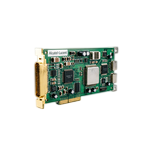
The Alcatel-Lucent 3FE27289B BD03 NALT-D (Network Access Line Terminal - D) is a line processing unit engineered for high-density broadband subscriber line interface termination, signal processing, and multi-service access delivery in telecommunications access network platforms. This module provides multiple xDSL (Digital Subscriber Line) ports for connecting end-user premises equipment over existing copper telephone infrastructure, supporting ADSL, ADSL2, ADSL2+, VDSL, and VDSL2 technologies for high-speed internet, IPTV, and voice service delivery in fiber-to-the-node (FTTN), fiber-to-the-cabinet (FTTC), and fiber-to-the-building (FTTB) deployments. The NALT-D card implements advanced physical layer functionality including discrete multi-tone (DMT) modulation, adaptive bit loading, trellis coding, forward error correction (FEC), interleaving for impulse noise protection, seamless rate adaptation (SRA), and sophisticated echo cancellation for optimized performance over varying loop lengths and line conditions. The board features integrated line drivers and receivers with hybrid circuits for full-duplex transmission, analog front-end (AFE) processing with high-resolution analog-to-digital and digital-to-analog converters, and flexible configuration options for diverse service profiles. Advanced features include dynamic spectrum management (DSM) for crosstalk mitigation and spectrum optimization, power spectral density (PSD) shaping, virtual noise compensation, impulsive noise protection (INP) per ITU-T G.998.4 specifications, retransmission mechanisms, and bonded pair support per G.998.1/G.998.2 (G.bond) for enhanced line stability, performance, and extended reach. The module supports comprehensive performance monitoring including line attenuation, signal-to-noise ratio (SNR) margin per tone and aggregate, bit error rate (BER), code violations, CRC errors, loss of frame (LOF), loss of signal (LOS), and unreachable seconds (UAS) measurements for proactive maintenance, service level agreement (SLA) verification, and network optimization. Integration with the access shelf backplane provides connectivity to control processors, uplink modules (Gigabit Ethernet, 10 Gigabit Ethernet), timing distribution units, and power systems for coordinated network operation. Management interfaces include embedded operations channel (EOC) for in-band management, SNMP v3, TL1, TR-069, and proprietary element management system protocols for integration with Alcatel-Lucent's 5520 AMS, 5620 SAM, and third-party network management systems, providing access to port configuration, line profile management, spectrum management parameters, performance statistics, alarm status, and diagnostic information including loop testing, line qualification, and fault isolation capabilities. The NALT-D implements sophisticated quality of service (QoS) mechanisms including traffic classification, priority queuing, weighted fair queuing (WFQ), traffic shaping and policing per ATM and PTM (Packet Transfer Mode) specifications for differentiated service delivery across multiple service classes including voice, video, and data applications. Power is distributed via −48 V DC backplane with integrated voltage regulation, current monitoring, and overcurrent protection. Environmental specifications comply with ETSI EN 300 019 Class 3.1 and NEBS GR-63 Level 3 standards, supporting continuous operation in controlled telecommunications facilities with ambient temperatures from 0 °C to +45 °C and relative humidity up to 95% non-condensing. The NALT-D is validated for deployment in Alcatel-Lucent 7300/7330/7340/7360 ISAM FTTN/FTTC/FTTB platforms and related broadband access systems, and ensures compliance with ITU-T G.992.1/G.992.3/G.992.5 (ADSL/ADSL2/ADSL2+), G.993.1/G.993.2 (VDSL/VDSL2), G.997.1 (G.ploam), G.998.1/G.998.2 (G.bond), G.998.4 (G.inp), T1.413, ANSI T1.424, ETSI TS 101 388, and Broadband Forum TR-101 standards for carrier-grade broadband access line termination and multi-service delivery over copper infrastructure.