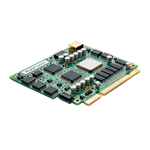
Descripción
The Alcatel-Lucent 3FE60858BB EA03 NPOT-B (Network Processing and Optical Terminal - B) is a control unit board engineered for comprehensive broadband access network management, service orchestration, and optical line terminal control in telecommunications fiber-to-the-x (FTTx) access network platforms. This module provides centralized control and coordination functions for GPON (Gigabit-capable Passive Optical Network), XG-PON, or XGS-PON optical line terminals (OLT), subscriber service management, bandwidth allocation, quality of service (QoS) enforcement, and network element orchestration across metropolitan and regional fiber access deployments. The NPOT-B card implements advanced control plane functionality including dynamic bandwidth allocation (DBA) for upstream traffic scheduling, optical network unit (ONU) registration and management, service flow admission control, traffic engineering, and policy enforcement for converged voice, data, and video services over passive optical network infrastructure. The board features high-speed backplane interfaces for communication with GPON/XG-PON/XGS-PON line interface modules, uplink cards (Gigabit Ethernet, 10 Gigabit Ethernet, 40 Gigabit Ethernet), system control processors, and timing distribution units for coordinated network operation. Advanced features include automated ONU discovery and activation, remote ONU management and diagnostics, performance monitoring of optical power levels, bit error rate (BER), packet loss, latency, and jitter measurements, dynamic bandwidth allocation (DBA) with multiple scheduling algorithms (status reporting, non-status reporting, hybrid) for efficient upstream capacity utilization, traffic shaping and policing per Ethernet and MPLS specifications, and comprehensive Quality of Service (QoS) enforcement with priority queuing, weighted fair queuing (WFQ), hierarchical QoS (H-QoS), class-based queuing (CBQ), and traffic prioritization for differentiated service delivery across multiple service classes. The module supports integration with broadband remote access servers (BRAS), aggregation routers, and service edge platforms through Ethernet uplinks with support for 802.1Q VLAN tagging, Q-in-Q (802.1ad), MPLS, and IPv4/IPv6 dual-stack encapsulation for service multiplexing, traffic engineering, and next-generation network migration. Management interfaces include SNMP v3, TL1, TR-069, NETCONF/YANG, RESTful APIs, OMCI (ONT Management and Control Interface), and proprietary element management system protocols for integration with Alcatel-Lucent's 5520 AMS, 5620 SAM, 1350 OMS, and third-party network management systems, OSS/BSS platforms, and service orchestration frameworks, providing access to ONU configuration, service profile management, bandwidth allocation policies, optical power monitoring, performance statistics, alarm status, diagnostic information, and software image management for both OLT and ONU components. The NPOT-B implements redundant controller architecture with automatic protection switching, stateful switchover, graceful restart capabilities, and distributed database synchronization to maintain carrier-grade availability exceeding 99.999% and zero service disruption during controller failover events. Power is distributed via redundant −48 V DC feeds with integrated voltage regulation, current monitoring, overcurrent protection, and intelligent power management. Environmental specifications comply with ETSI EN 300 019 Class 3.1 and NEBS GR-63 Level 3 standards, supporting continuous operation in controlled telecommunications facilities with ambient temperatures from 0 °C to +45 °C and relative humidity up to 95% non-condensing. The NPOT-B is validated for deployment in Alcatel-Lucent 7360 ISAM FX fiber access platforms, 7368 ISAM FX, and related FTTx broadband access systems, and ensures compliance with ITU-T G.984.x (GPON), G.987.x (XG-PON), G.9807.1 (XGS-PON), G.988 (OMCI), IEEE 802.1Q/802.1ad/802.3, IETF RFC specifications, MEF specifications, Broadband Forum TR-101/TR-167/TR-301, and ETSI TS 101 388 standards for carrier-grade fiber access network control, multi-service delivery, and next-generation passive optical network evolution.